The European Association for Palliative Care (EAPC) World Congress held May 14–15 in Prague, Czech Republic, brought together nearly 2,000 participants from 76 countries for two days of learning, exchange, and connection. For Global Partners in Care, the gathering offered a powerful opportunity to advance the work at the heart of our mission: building bridges across cultures, regions, and contexts to strengthen palliative care worldwide.
Throughout the congress, GPIC connected with regional leaders, global organizations, and colleagues from across the palliative care community. The program had scientifically rigorous presentations, posters, and discussions alongside meaningful cultural highlights. Performances by the Prague Cello Quartet and the Jarošáček Children’s Folk Group opened and closed the congress, grounding the global meeting in Czech culture and hospitality.

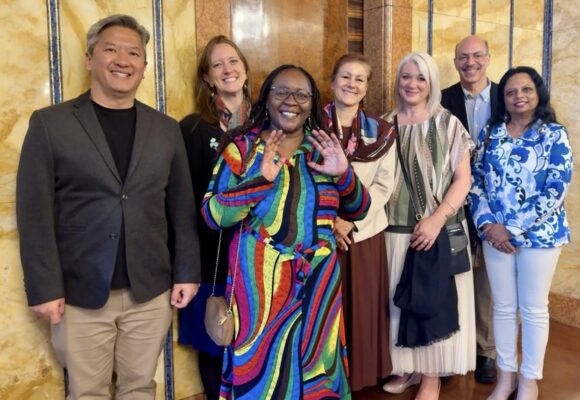
GPIC with regional leaders from the African, Asia Pacific, and Latin American associations.
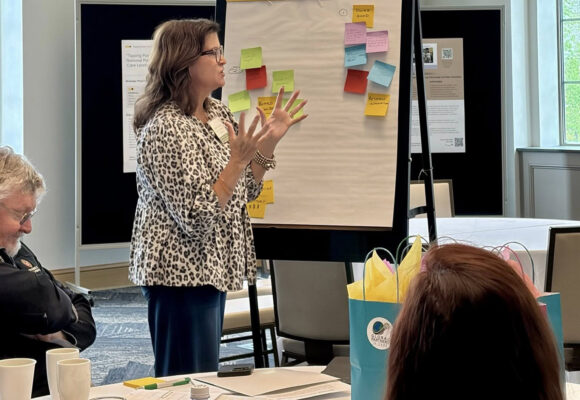
One especially strong session highlighted partnerships in the Czech Republic that have collaboratively advanced palliative care across the country. Representatives from government, civil society, and private foundations shared how they worked together to develop strategy, strengthen trust, and implement sustainable system innovations that have helped palliative care grow in meaningful ways.
Another standout moment was the joint session hosted by the Asia Pacific Hospice Palliative Care Network (APHN) and EAPC on leadership in palliative care. The partnership between these two regional organizations offered an inspiring model for cross-regional collaboration and shared learning. Their work demonstrates how regional associations can build momentum together around specific projects and common priorities.

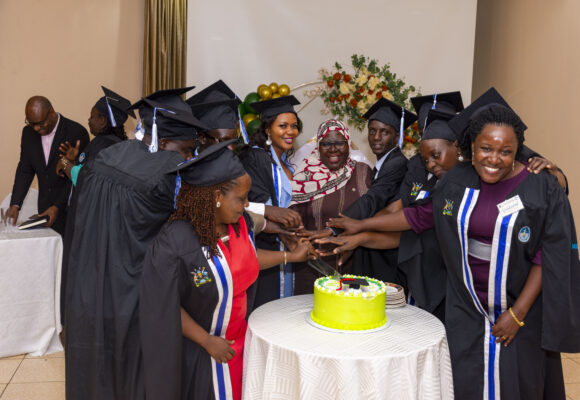
Congress attendees gathering at the GPIC booth.
Presentations from colleagues at the African Palliative Care Association and the Cicely Saunders Institute at King’s College London through the Global Health Palliative Care initiative focused on progress in children’s palliative care and the importance of measuring outcomes.
In addition, GPIC attended a nurse leadership meeting hosted by End-of-Life Nursing Education Consortium (ELNEC), which brought together participants from 35 countries. The meeting reflected a strong global commitment to palliative care education and leadership development for nurses, who remain essential to expanding access to quality care.
A thought-provoking session on access to controlled medicines featured Dr. Parth Sharma of Cachar Cancer Hospital and Research Centre in India. Speaking alongside presenters from the United States and Canada, Dr. Sharma discussed the implications of opioid diversion concerns and restrictive policies in low-resource settings. Drawing on work carried out with the Association for Socially Applicable Research and the UNODC Young Doctors Network, the session underscored an uncomfortable reality: many excessive restrictions on safe access to controlled medicines are not strongly based in evidence. Dr. Sharma emphasized the need for a balanced, scientific approach that ensures legitimate medical access while preventing diversion, with particular attention to addressing pain and suffering among marginalized populations and those living in low-resource settings.
Together with EAPC, GPIC also convened leadership from major regional palliative care associations, including the emerging Southwest Asia and North Africa (SWANA) palliative care group. These conversations created space for regional leaders to exchange priorities, identify opportunities for collaboration, and strengthen relationships.
As a world congress, the EAPC gathering continued to demonstrate a growing commitment to including presenters, exhibitors, and participants from around the globe. As Dr. Hibah Osman reflected for the International Association for Hospice and Palliative Care:
“The EAPC’s ambition to evolve the congress into a genuinely global platform is both welcome and timely. That ambition was visible in some of the congress’s most generative moments: presentations on opioid access restrictions in New Delhi and inclusive care for LGBTQ+ persons in Lebanon were among the most thought-provoking of the week, and reflected the creativity and adaptability of colleagues building palliative care in complex, under-resourced contexts.”

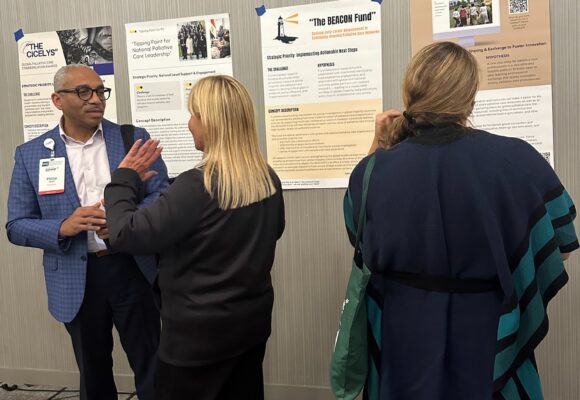
Leaders from APHN and EAPC co-leading a session on leadership in palliative care.
GPIC looks forward to the continued engagement of speakers and learners from across the globe, especially colleagues working in lower-resource settings. Their innovation and experience offer essential lessons for the wider palliative care community, including those working across Europe and other well-resourced contexts.
As with many in-person gatherings, some of the most important moments happened beyond the formal program—in hallway conversations, informal meetings, and new relationships built over shared mission. These connections are the foundation for collaborative partnerships, and which remain one of the most powerful ways to increase impact in the advancement of palliative care for those in need.
The congress offered rich content, encouraged networking among early-career professionals, and established leaders and fostered collaboration across regions. GPIC congratulates the local organizing committee and the EAPC staff and board for an excellent meeting and looks forward to building on the relationships and ideas strengthened in Prague.