
Global Partners in Care at NPHI Summit 2026
At the 2026 National Partnership for Healthcare Innovation (NPHI) Annual Summit in Chicago, Global Partners in Care (GPIC) supported global engagement across the conference by helping bridge global palliative care evidence with local, actionable solutions for U.S. health care leaders.
Our engagement featured two complementary contributions: Dr. Richard Harding’s plenary address which framed global inequities in palliative and end-of-life care and a global breakout session focused on translating global impact into practical, local innovation.
A Global Lens on a Shared Challenge
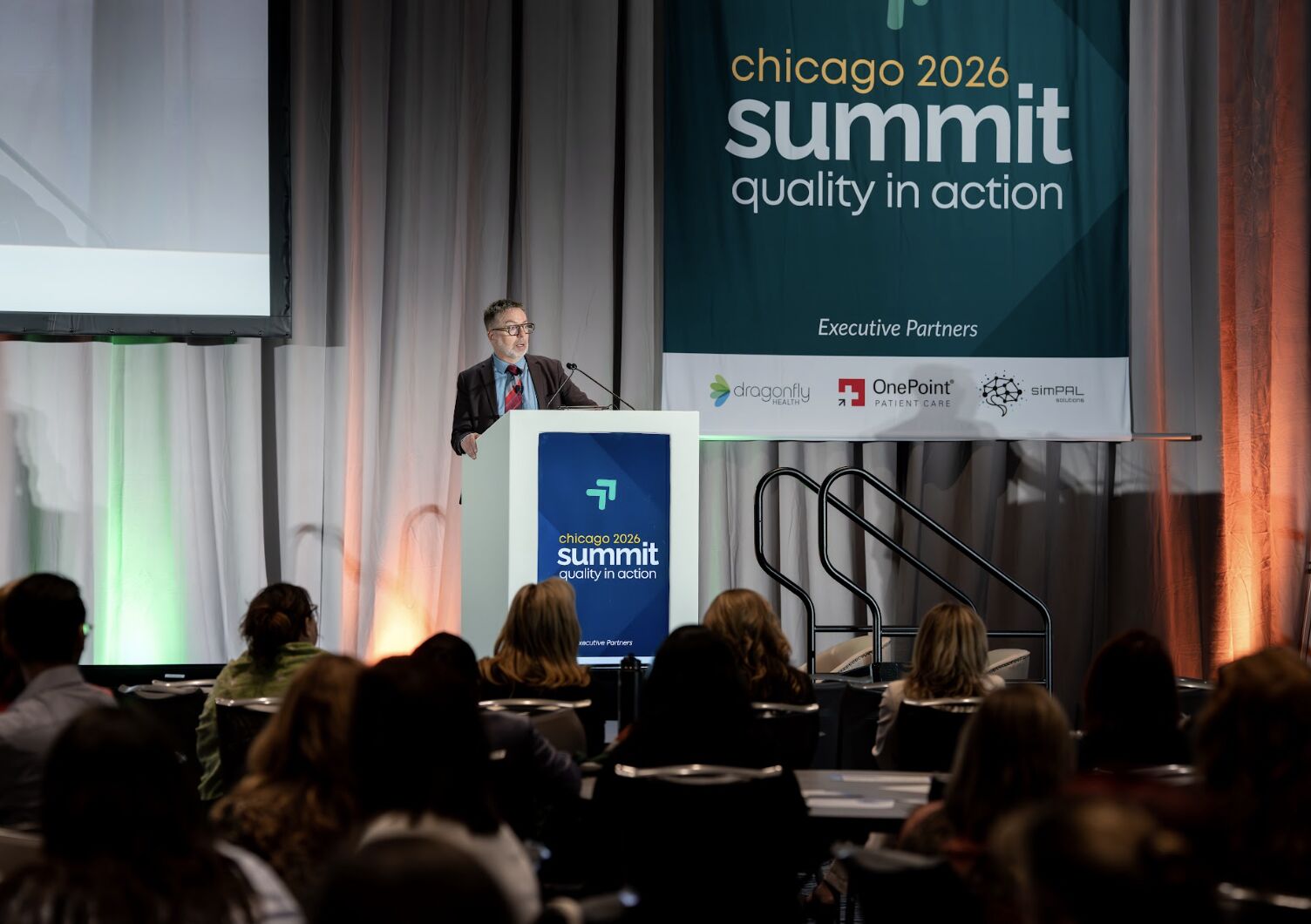
In his plenary, Dr. Richard Harding, Executive Dean at King’s College London and a global leader in palliative care research, challenged attendees to confront what he described as the “final inequity”: unequal access to palliative and end-of-life care worldwide. Drawing on decades of global evidence, Dr. Harding highlighted both the scale of unmet need and the remarkably consistent drivers of high-quality palliative care across diverse settings: person-centered care, community engagement, trained workforces, and measurement that reflects what matters to patients and families.
While grounded in global data, the plenary message resonated strongly with U.S. audiences. Workforce shortages, fragmented systems, inequitable access, and misaligned metrics are not uniquely global problems – they are shared challenges that demand shared learning.
Translating Global Insights into Local Solutions
Building on the plenary, GPIC supported a breakout session titled “From Global Engagement to Local Impact,” designed to move from inspiration to implementation. Framed by the ongoing work of the Collaborating for Global Impact Initiative, the session explored how innovations developed in low-resource and international settings can inform U.S. practice – particularly for rural, frontier, and underserved communities. GPIC team members John Mastrojohn, Lacey Ahern and Lydia Thomas were joined by Dr. Mark Stoltenberg, Physician and Assistant Professor of Medicine, Massachusetts General Hospital/Harvard University, who presented his experiences in partnership formation, and Dr. Jim Cleary, Physician and Board Chair, Worldwide Hospice and Palliative Care Alliance, who presented challenges with access to opioids and how global collaborations have been vital in addressing inequities in opioid access across the globe.
Participants examined examples of task-shifting, community-based care models, and interdisciplinary flexibility that have expanded access to palliative care globally. These approaches – often developed out of necessity – can offer practical lessons for U.S. providers navigating workforce scarcity, financial pressure, and rising demand. Real-world applications included community health worker models, expanded volunteer roles, and deeper partnerships with faith and community organizations.
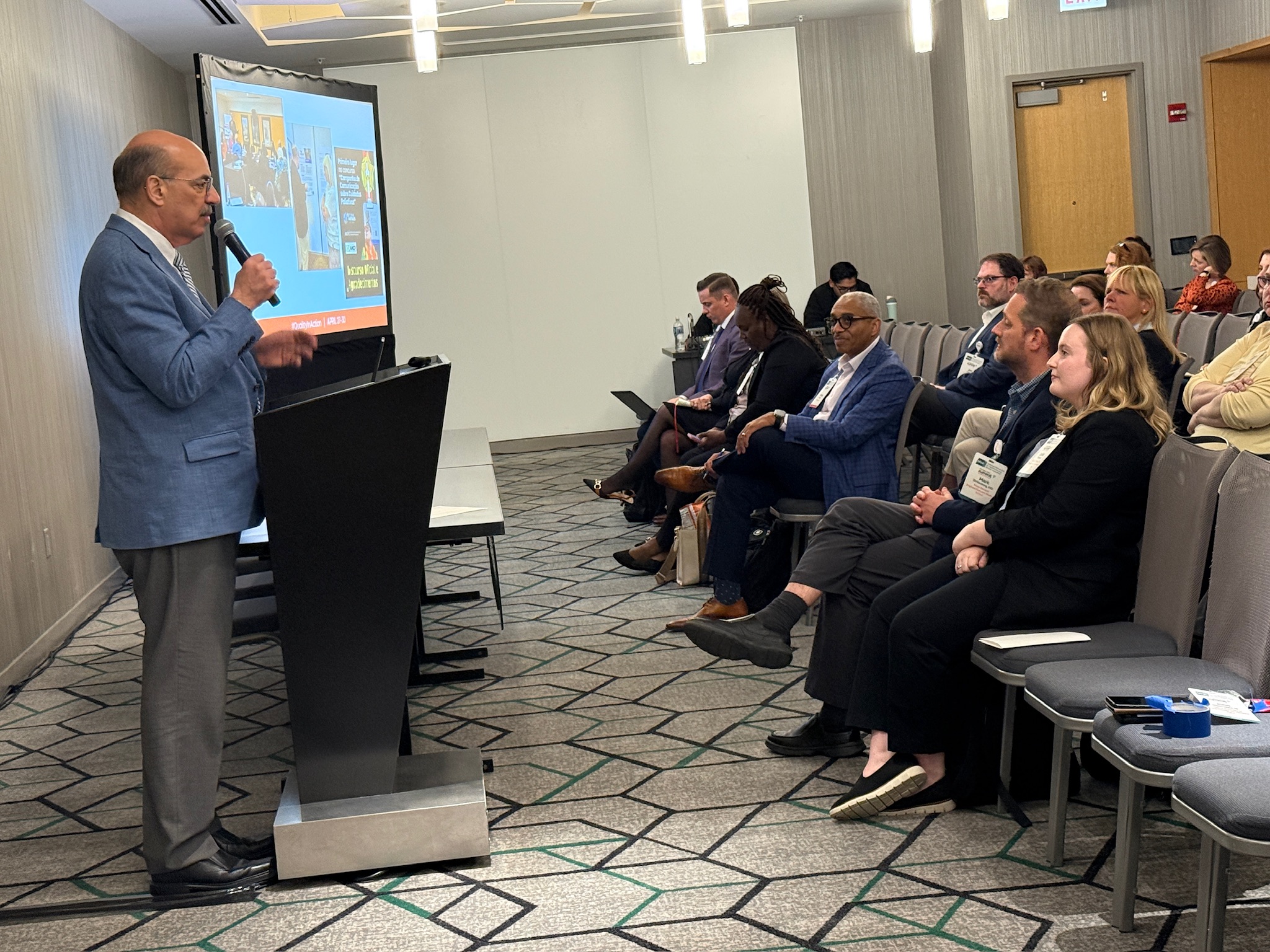
Q&A with speakers during the breakout session: From Global Engagement to Local Impact
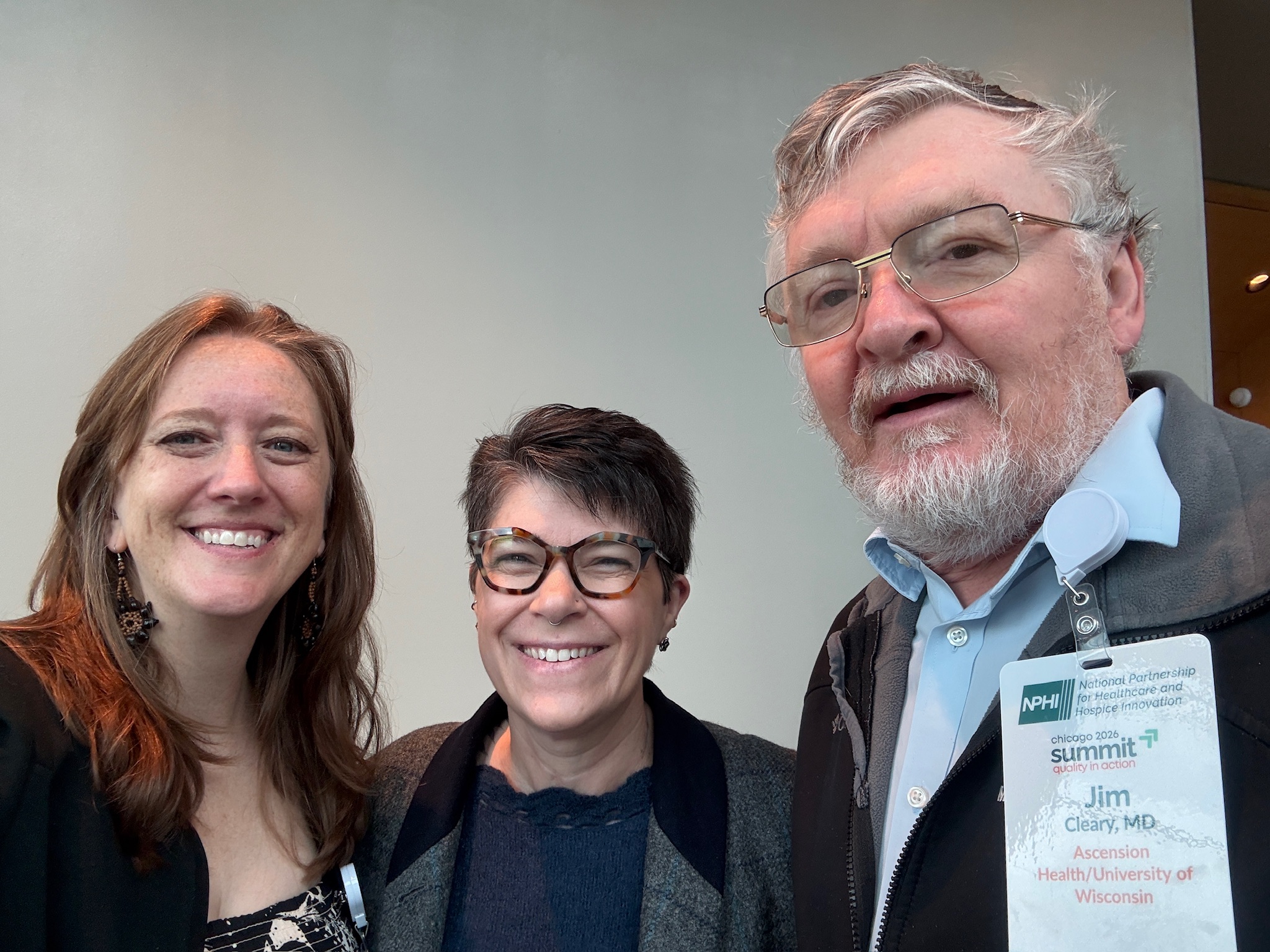
GPIC executive director with advisory council members, Stephanie Johnston and Dr. Jim Cleary
Crucially, the discussion emphasized bidirectional learning. Participants heard from Global partnerships are not about exporting solutions, but about co-creation, humility, and adaptation. U.S. providers have much to learn from global colleagues about presence, community ownership, and delivering high-impact care with limited resources.
Strengthening a Global–Local Community
Together, Dr. Harding’s plenary and the global breakout highlighted a central theme of NPHI 2026: advancing quality requires looking beyond traditional boundaries. By connecting global evidence with local implementation, GPIC’s engagement reinforced the idea that global palliative care innovation is not peripheral to U.S. health care—it is directly relevant to improving access, equity, and quality at home.
As the summit closed, one message was clear: global engagement is not an add-on – it is a strategic asset for health systems committed to reducing suffering and delivering care that truly meets the needs of patients and families, wherever they live.