
How Tanzanian and United States Leaders Are Advancing Palliative Care
This article was collectively written by members of the Global Partners in Care (GPIC) and Evangelical Lutheran Church of Tanzania (ELCT) teams and Audrey Adon, a GPIC student intern who worked with ELCT in 2025.
A two-decade partnership between Global Partners in Care (GPIC) and the Evangelical Lutheran Church of Tanzania (ELCT) shows how sustained, reciprocal learning can expand access to palliative care and inspire new models of community-based support in both Tanzania and the United States.
GPIC (formerly the Foundation of Hospices in Sub-Saharan Africa – FHSSA) and ELCT have worked together to advance palliative care in Tanzania and the United States. In Tanzania, the partnership has expanded services for orphans and vulnerable children, those with life-threatening illnesses, and populations affected by HIV/AIDS. In the United States, lessons from Tanzanian partners have strengthened community-based approaches to palliative care. The impact of this partnership ripples across both countries, forging relationships grounded in mutual respect and a shared mission that is strengthened by knowledge exchange to advance palliative care in both countries.
A Foundation Built on a Shared Mission
The history of ELCT started before Tanzania itself was established. In 1938, the seven churches formed the Federation of Lutheran Churches in Tanganyika. Several decades later, they decided to form one single church, the Evangelical Lutheran Church of Tanganyika in 1963. When the country united with Zanzibar the following year, the name was changed to the Evangelical Lutheran Church of Tanzania. The church formed many social services departments aimed at supporting vulnerable populations. In 2004, Dr. Kristopher Hartwig from the Evangelical Lutheran Church of America collaborated with Dr. Paul Mmbando from ELCT to establish a department for those needing palliative care under the ELCT umbrella.
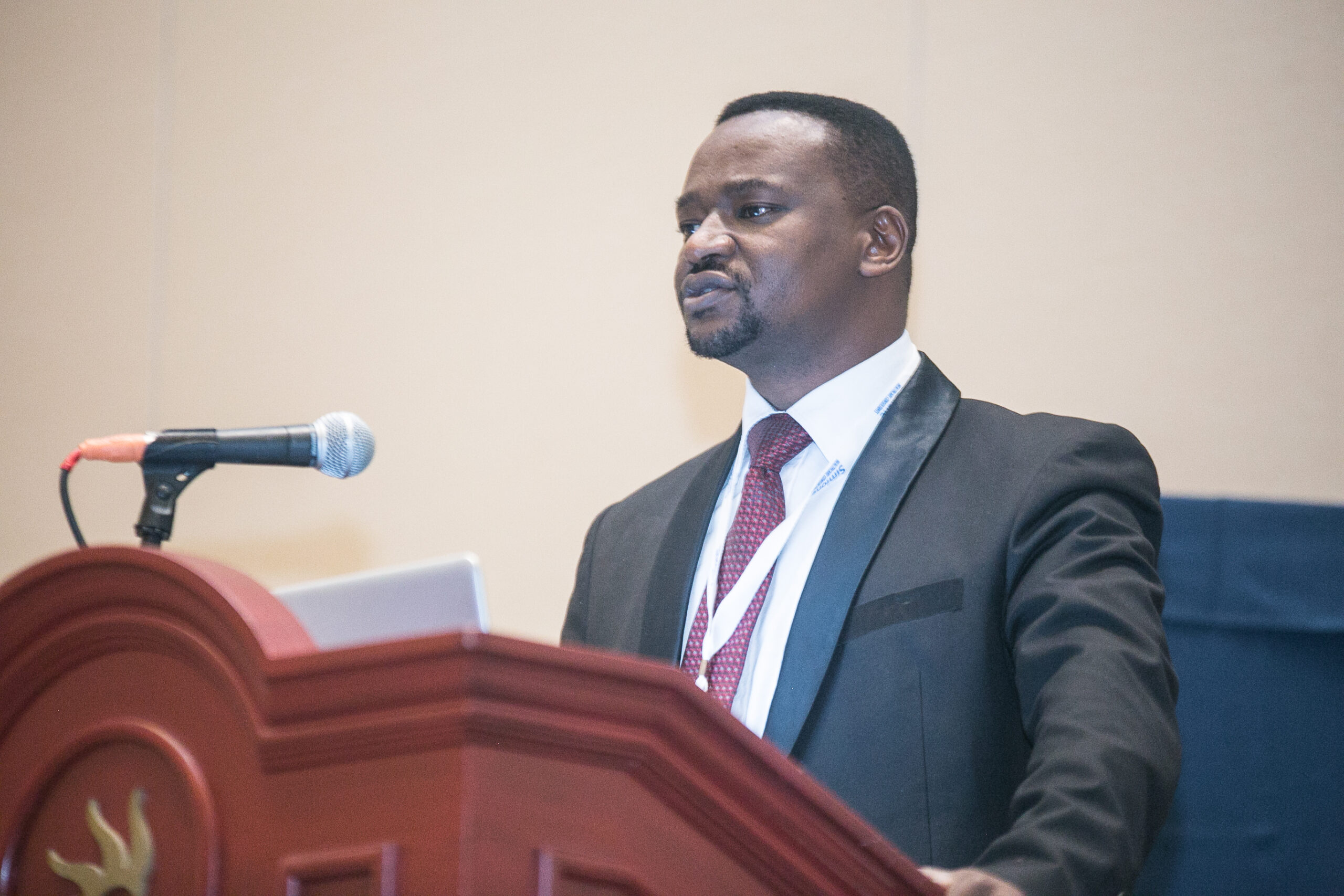
Dr. Paul Mmbando speaking to United States hospice and palliative care colleagues.
That same year, the African Palliative Care Association and GPIC (then FHSSA) began working with ELCT. Together, the partners developed a successful proposal for funding through President’s Emergency Plan for Aids Relief (PEPFAR) grant through the United States Agency for International Development (USAID). The grant supported the launch of a palliative care program at Selian Lutheran Hospital. This support for palliative care extended across 13 rural health facilities in Tanzania, establishing the Continuum of Care for People Living with HIV/AIDS in Tanzania (CHAT) initiative.
At the time the CHAT initiative was launched, People Living with HIV/AIDS (PLWHA) faced massive disparities in accessing life-saving treatment. HIV/AIDS was the number one cause of death for persons in sub-Saharan Africa. Palliative care was vital to ensuring these patients and families received access to high-quality, compassionate care that reduced preventable suffering. Palliative care leaders from ELCT and FHSSA knew the invaluable role palliative care could have for these patients. Our relationship, based in mutual respect and value for one another’s expertise, served as the foundation for the collaborative and impactful work that followed.
To ensure the project had a wide and long-lasting reach, CHAT implementation centered on training volunteers and health professionals to administer holistic palliative care in their communities to fill healthcare gaps. After the training, CHAT established palliative care in the rural facilities through a four-step process: educating hospitals, advocating for palliative care and drug availability to the Tanzanian government, training health care professionals, and providing needed resources and funding. As a result of this initiative, the 14 original hospitals established pathways to access morphine for pain relief, four additional hospitals introduced their own palliative care programs, and over 10,000 individuals – about half being orphans and vulnerable children – accessed needed services.
CHAT marked the formal beginning of the ELCT–GPIC partnership to advance palliative care in Tanzania. Beyond supporting service delivery, the collaboration developed curricula, expanded advocacy, built capacity at facility and community levels, and strengthened connections between providers and government systems. This foundation enabled the partnership to continue after the initiative itself ended.
“The partnership with Global Partners in Care has been very important to ELCT’s work. It has strengthened our four core roles of capacity building, advocacy, facilitation, and coordination, while supporting palliative care across our health facilities and programs.” – Dr. Paul Mmbando
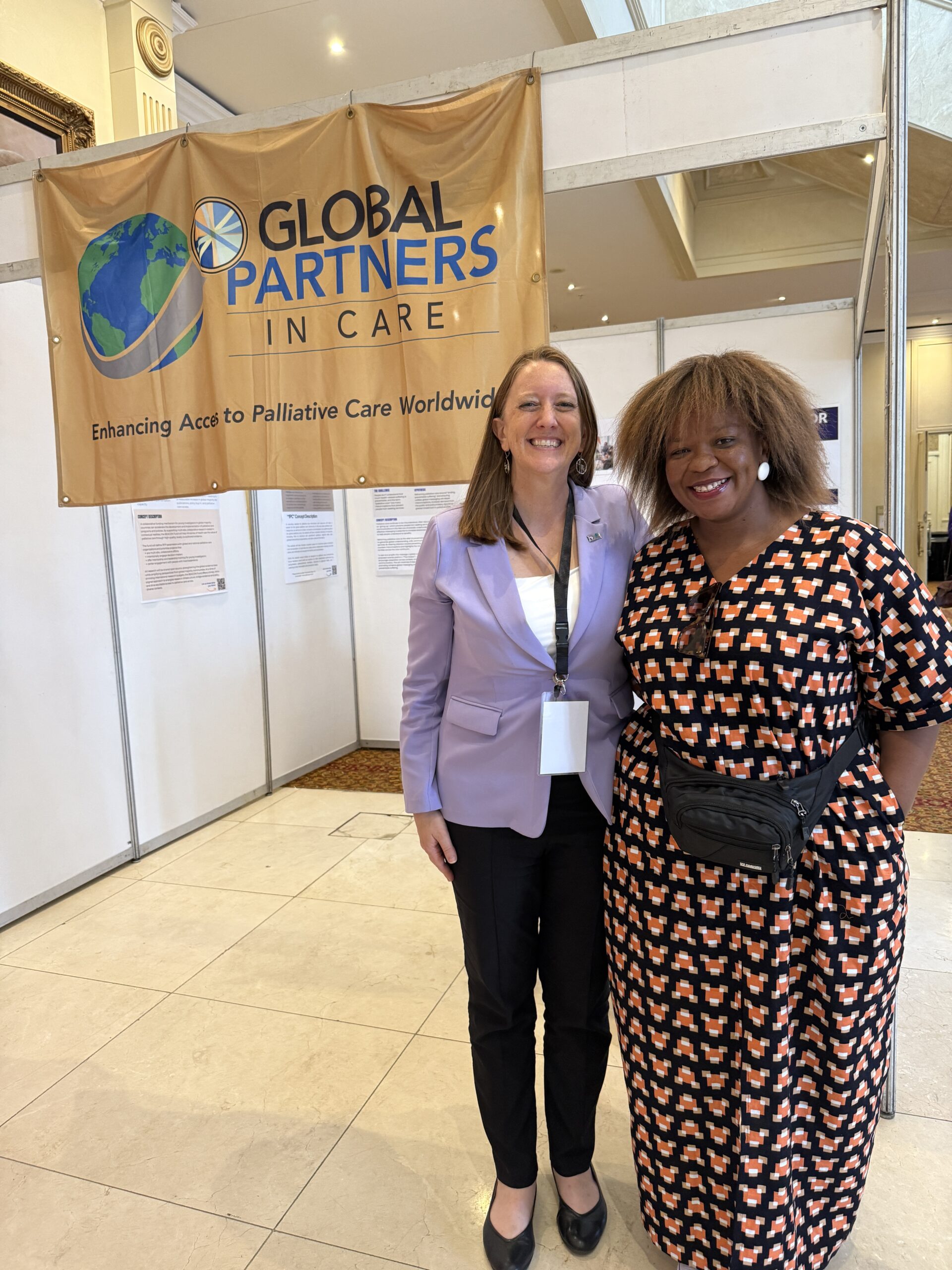
Lacey Ahern with a member of the ELCT team at the 2025 International African Palliative Care and Allied Health Services Conference.
Innovation that Improves Palliative Care Across Contexts
Although the CHAT initiative ended in 2011, GPIC and ELCT continued to deepen our collaboration. In the years that followed, additional hospitals implemented palliative care programs, while the partners advanced shared goals by training health care workers and equipping palliative care leaders. They also established twinned partnerships between Tanzanian palliative care units and United States hospice organizations, creating channels for knowledge exchange, relationship building, and technical support. Through these partnerships, Tanzanian providers have built relationships with colleagues in Colorado, Indiana, Maryland, Ohio, Michigan, Nebraska, Utah, Kansas, Texas, and Vermont, contributing to care programs in both countries.
Reciprocal learning also shaped care in the United States. John Mastrojohn III, CEO of GPIC and Center for Hospice Care, learned from Tanzanian partners about community-based approaches that could extend the reach of palliative care. Center for Hospice Care subsequently integrated community health workers into its palliative care model to better support patients in Indiana.
“One of the most consequential innovations in our palliative care program at Center for Hospice Care was inspired by lessons learned from the work of our colleagues in Tanzania. Their community health worker model showed us how trusted community-based support could extend the reach and impact of palliative care. We brought those lessons home, where they became a core aspect of our own program. Today, three full-time community health workers are helping patients and families in Indiana navigate serious illness with greater support, connection, and dignity.” – John Mastrojohn III
Collaboration for Greater Impact
Looking ahead, ELCT and GPIC will continue working together to expand palliative care in Tanzania and the United States while maintaining ELCT’s commitment to high-quality, holistic care. ELCT is advancing innovation by integrating palliative care into sexual and reproductive health efforts, contributing to national policy development, and mentoring emerging leaders. The partnership will build on this work through continued knowledge exchange, stronger relationships, and co-developed approaches that leaders can adapt across both countries.
Currently, eight of the 50 palliative care units in the ELCT health system are partnered with United States hospice/palliative care organizations. These twinned engagements are part of a larger and coordinated effort to advance palliative care globally. GPIC remains committed to engaging more organizations in these rich partnerships to promote reciprocal exchange, shared learning, and the creation of co-led projects that improve care for patients needing palliative care.
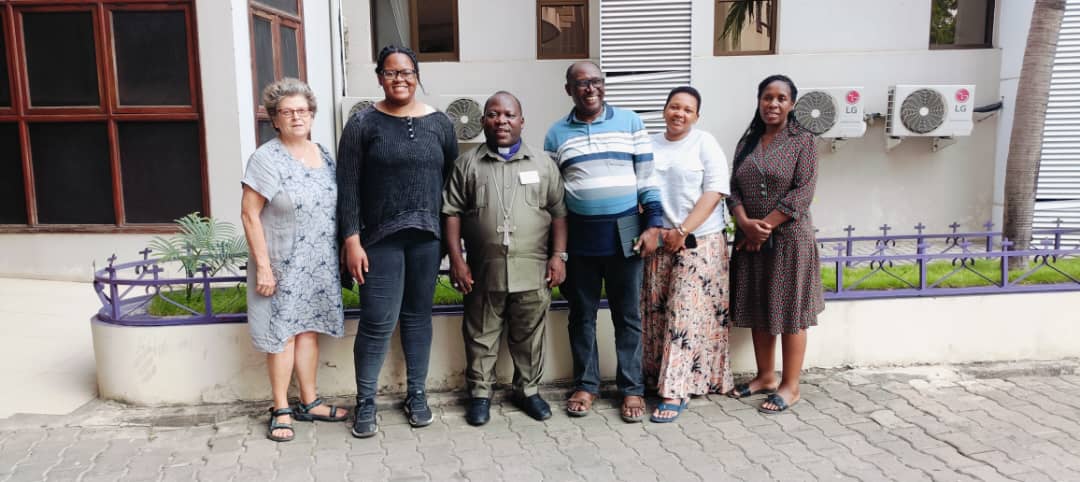
Audrey Adon with members of the ELCT team.
Through sustained collaboration, GPIC and ELCT have helped thousands of patients and families access essential services, prepared new palliative care leaders, and advanced community-based approaches in Tanzania and the United States. Our experience shows that reciprocal partnership does more than transfer knowledge: it creates the relationships and shared capacity needed to improve care across contexts.
Contact Global Partners in Care at Partner@GlobalPartnersinCare.org if you would like to get involved!